
How to Prepare for UAE E-Invoicing
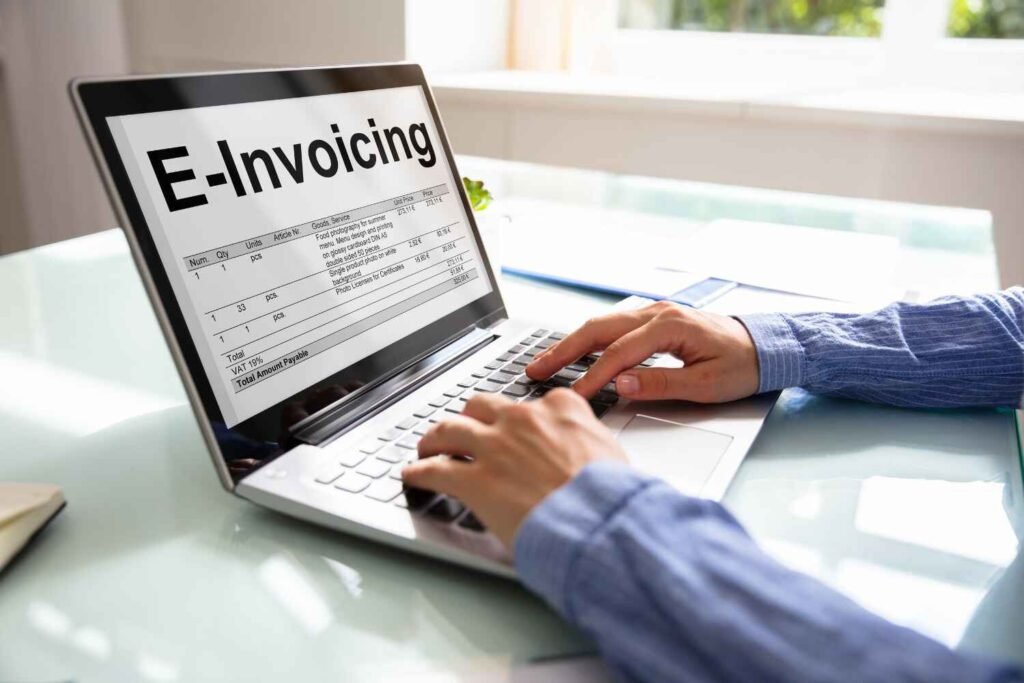
How to Prepare for UAE E-Invoicing is becoming one of the most important topics for businesses operating in the UAE as the country moves toward a fully digital tax and invoicing ecosystem. The introduction of e-invoicing will transform how businesses create, exchange, validate, and store invoices, making financial transactions more transparent, secure, and efficient.
Businesses of all sizes from startups and SMEs to large enterprises should begin preparing now to ensure a smooth transition, avoid compliance issues, and maximize the benefits of digital invoicing.
- Introduction
- What Is UAE E-Invoicing?
- Why Is the UAE Introducing E-Invoicing?
- Benefits of E-Invoicing for UAE Businesses
- How to Prepare for UAE E-Invoicing
- Common Challenges Businesses May Face
- Who Will Benefit Most from E-Invoicing?
- Best Practices for a Smooth Transition
- How SK Financial Services Can Help
- FAQs About UAE E-Invoicing
- Final Thoughts
Introduction
The UAE government continues to embrace digital transformation to strengthen tax compliance, improve business efficiency, and align with international best practices. One of the most significant initiatives is the implementation of the UAE E-Invoicing System.
Unlike traditional paper invoices or PDF invoices sent via email, e-invoices are generated, exchanged, and processed electronically using a standardized format that allows systems to communicate automatically.
Preparing early will help businesses upgrade their accounting systems, improve operational efficiency, reduce manual errors, and ensure compliance with future regulatory requirements.
What is UAE E-Invoicing?
E-invoicing is the electronic generation, exchange, validation, and storage of invoices between buyers and sellers using structured digital formats.
An e-invoice is not simply a scanned paper invoice or PDF document. Instead, it contains structured data that accounting systems can automatically read and process without manual intervention.
The UAE Ministry of Finance plans to implement an interoperable e-invoicing framework that will support secure and standardized invoice exchange across businesses.

Why is the UAE Introducing E-Invoicing?
The UAE is introducing e-invoicing to:
- Improve tax compliance
- Reduce tax fraud
- Enhance financial transparency
- Simplify VAT reporting
- Support digital transformation
- Reduce paperwork
- Improve business efficiency
- Standardize invoice processing
- Encourage automation
- Strengthen the UAE’s digital economy
Benefits of E-Invoicing for UAE Businesses
1. Faster Invoice Processing
Electronic invoices can be exchanged instantly, reducing delays associated with paper-based systems.
Benefits include:
- Faster billing
- Faster approvals
- Improved cash flow
- Quicker payment collection
2. Improved Accuracy
Manual invoicing often results in:
- Typographical errors
- Duplicate invoices
- Incorrect VAT calculations
- Missing information
Automated e-invoicing significantly reduces these errors.
3. Better VAT Compliance
Structured invoice data makes VAT reporting easier and more accurate.
Businesses can:
- Generate compliant tax invoices
- Improve recordkeeping
- Reduce filing errors
- Prepare for VAT audits more efficiently
4. Reduced Operating Costs
Businesses can lower expenses related to:
- Printing
- Paper
- Courier services
- Manual processing
- Physical document storage
Digital invoicing also reduces administrative workloads.
5. Enhanced Security
Modern e-invoicing platforms include:
- Secure transmission
- Digital authentication
- Data encryption
- Audit trails
- Controlled access
These features help protect financial information.
How to Prepare for UAE E-Invoicing
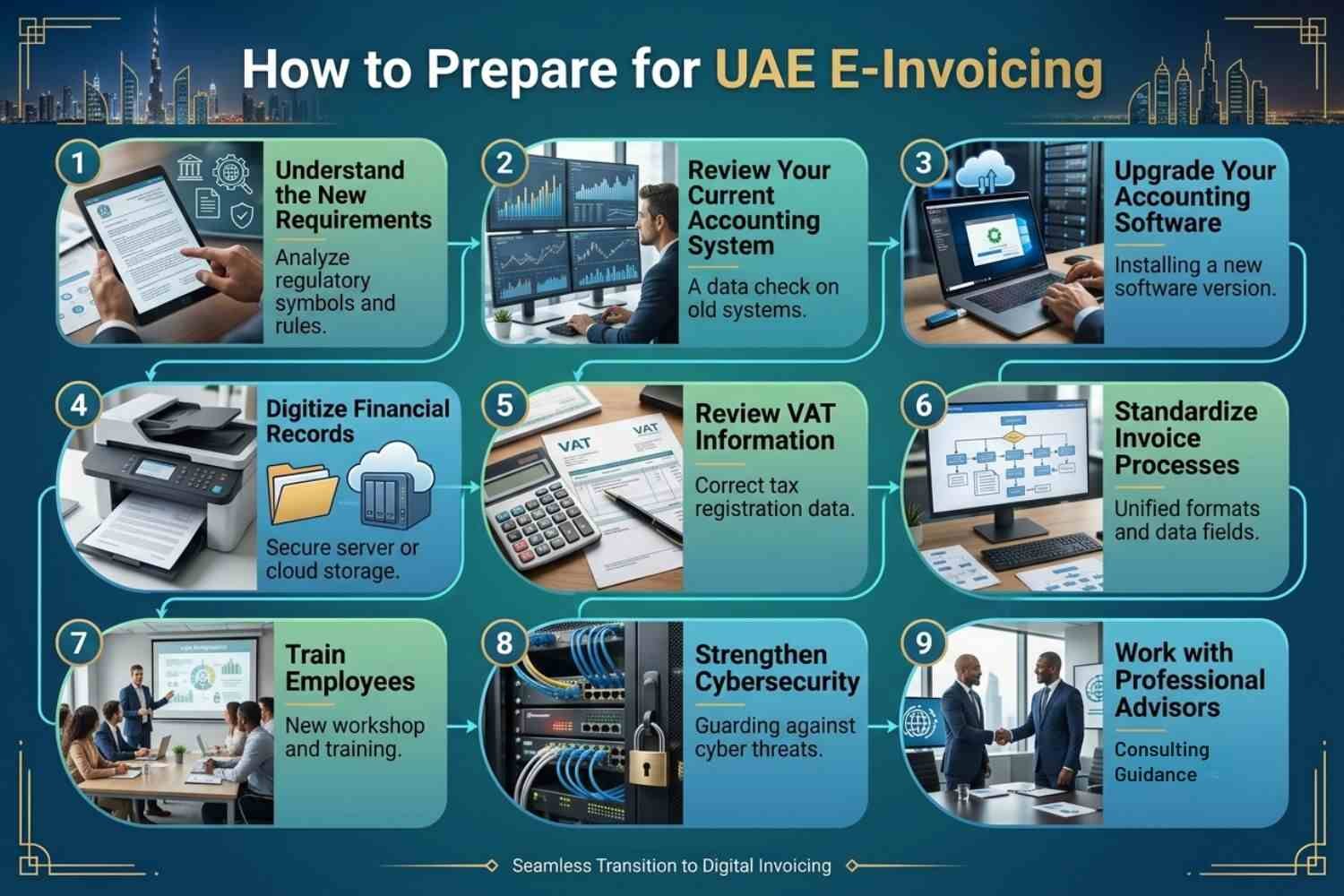
1. Understand the New Requirements
Business owners should stay informed about official guidance issued by the UAE Ministry of Finance and other relevant authorities.
Understanding compliance requirements early allows businesses to plan effectively.
2. Review Your Current Accounting System
Evaluate whether your accounting software supports:
- Electronic invoice generation
- Digital recordkeeping
- VAT compliance
- Automated reporting
- System integration
Older accounting systems may require upgrades or replacement.
3. Upgrade Your Accounting Software
Modern accounting software should support:
- Electronic invoicing
- Cloud access
- API integration
- Secure data storage
- Automated VAT calculations
Using updated software simplifies future compliance.
4. Digitize Financial Records
Businesses should begin moving away from paper-based processes.
Digital records improve:
- Accessibility
- Security
- Compliance
- Audit readiness
Electronic document management systems also reduce administrative burdens.
5. Review VAT Information
Ensure that your invoices include accurate:
- VAT Registration Number (TRN)
- Customer information
- Invoice numbering
- Tax calculations
- Product or service descriptions
Accurate invoice data will become even more important under e-invoicing.
6. Standardize Invoice Processes
Develop consistent procedures for:
- Invoice creation
- Approval workflows
- Invoice delivery
- Payment tracking
- Record retention
Standardized processes improve efficiency and reduce errors.
7. Train Employees
Employees involved in:
- Finance
- Accounting
- Sales
- Procurement
- Administration
should understand the new e-invoicing procedures.
Training should cover:
- Software usage
- Compliance requirements
- Internal controls
- Error handling
8. Strengthen Cybersecurity
Since invoices will be exchanged electronically, businesses should improve cybersecurity by:
- Using secure networks
- Implementing multi-factor authentication
- Updating security software
- Encrypting financial data
- Performing regular backups
Protecting financial information is essential.
9. Work with Professional Advisors
Professional accounting and tax consultants can help businesses:
- Assess readiness
- Upgrade financial systems
- Ensure VAT compliance
- Prepare documentation
- Develop implementation plans
Expert guidance minimizes implementation risks.
Common Challenges Businesses May Face
During implementation, businesses may encounter:
- Legacy accounting software
- Limited employee knowledge
- Data migration issues
- Integration challenges
- Increased cybersecurity risks
- Budget constraints
- Process changes
Early planning helps overcome these challenges.

Who Will Benefit Most from E-Invoicing?
Virtually every business operating in the UAE can benefit, including:
- Trading companies
- Retail businesses
- Manufacturers
- Service providers
- Construction companies
- Real estate firms
- Logistics companies
- Healthcare providers
- Hospitality businesses
- Professional service firms
Best Practices for a Smooth Transition

Businesses should:
- Start preparations early
- Review accounting software
- Digitize documentation
- Standardize invoice processes
- Train employees
- Strengthen cybersecurity
- Conduct internal testing
- Monitor regulatory updates
- Seek professional support
These steps help ensure a smooth implementation.
How SK Financial Services Can Help

At SK Financial Services, we assist businesses in preparing for the UAE’s evolving compliance landscape.
Our Services Include:
- Accounting & bookkeeping
- VAT registration and compliance
- Corporate tax services
- Financial reporting
- Internal audits
- Accounting software advisory
- Business compliance consulting
- Financial process improvement
- Risk management support
Our experienced professionals help businesses transition smoothly toward digital financial compliance.
FAQs About UAE E-Invoicing
UAE e-invoicing is the electronic creation, exchange, validation, and storage of invoices using structured digital data instead of paper or PDF invoices.
Yes. The objective is to create a standardized digital invoicing system that reduces manual processing and improves tax compliance.
Yes. Every business should monitor official announcements and prepare its accounting systems for future implementation requirements.
Businesses should use accounting software capable of generating structured electronic invoices, integrating with digital platforms, and maintaining secure financial records.
The main benefits include:
- Faster processing
- Improved accuracy
- Better VAT compliance
- Lower operational costs
- Enhanced security
- Greater efficiency
Final Thoughts
The UAE’s move toward e-invoicing represents another major milestone in the country’s digital transformation journey. Businesses that prepare early will benefit from improved operational efficiency, stronger compliance, enhanced financial accuracy, and a smoother transition when the system is fully implemented.
Rather than waiting until implementation becomes mandatory, organizations should begin reviewing their accounting systems, digitizing financial processes, training employees, and strengthening internal controls today.
At SK Financial Services, we are committed to helping businesses navigate regulatory changes with confidence. Whether you need assistance with accounting, VAT compliance, corporate tax, financial reporting, or preparing for UAE e-invoicing, our experienced team is ready to support your business every step of the way.

Feel Free to Contact Us
Mobile: +971 54 3304320
Email: Syed.Faisal@skfinancial.co
WhatsApp: +971 54 3304320
Timing: 09:00am to 05:00pm
Days: Monday to Saturday
Share this:
- Share on Facebook (Opens in new window) Facebook
- Share on X (Opens in new window) X
- Share on LinkedIn (Opens in new window) LinkedIn
- Share on Pinterest (Opens in new window) Pinterest
- Share on Reddit (Opens in new window) Reddit
- Share on Tumblr (Opens in new window) Tumblr
- Share on WhatsApp (Opens in new window) WhatsApp
- More